
![[2025] AWS re:Invent 2025 Key Announcements: AI for the Enterprise](https://assets.aboutamazon.com/dims4/default/410b1a7/2147483647/strip/true/crop/2000x1125+0+0/resize/1320x743!/quality/90/?url=https%3A%2F%2Famazon-blogs-brightspot.s3.amazonaws.com%2F41%2F6d%2F27a1e5f242798caad910a127c976%2Fabout-amazon-hero-garman-keynote.jpg)
[2025] AWS re: Invent 2025 Key Announcements: AI for the Enterprise
Introduction: AWS re: Invent 2025 Unveiled
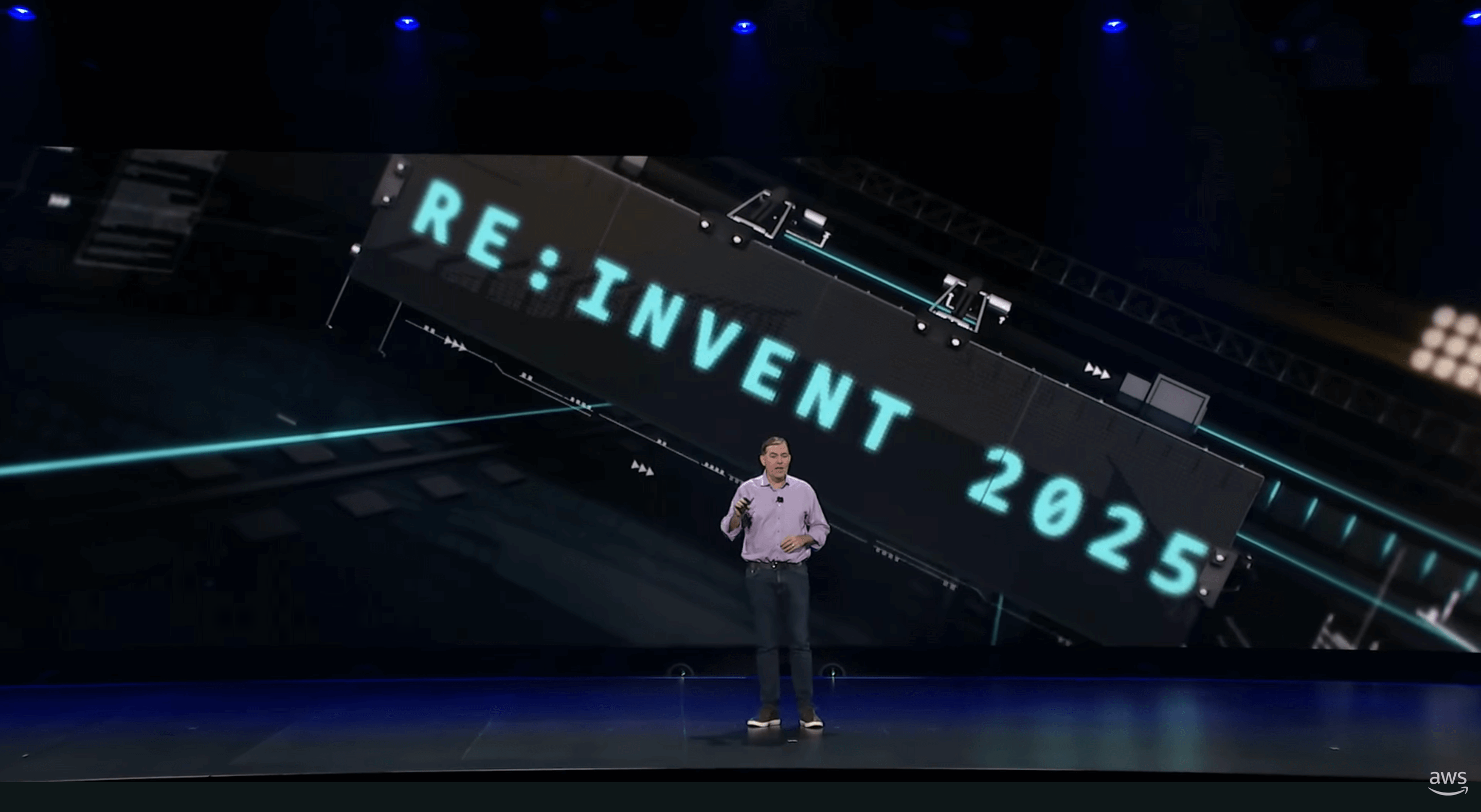
AWS re: Invent 2025 is not just a conference; it's a spectacle where technology meets innovation, redefining the frontiers of cloud computing and AI. This year's event, spanning from November 29 to December 5, has been abuzz with groundbreaking announcements, particularly in the realm of AI for the enterprise [1]. If you're in tech, or just tech-curious, this is the stuff you don't want to miss. From AI agents that act more like independent workers than assistants, to chips that promise to revolutionize processing speeds, AWS has set the stage for what's next [2].
In my experience, attending such events is like getting a sneak peek into the future. You get to hear industry leaders lay out their visions, and let's be honest, sometimes those visions are as much about what they hope will happen as what is actually feasible. Yet, the enthusiasm is infectious, and the innovations presented often become the standards of tomorrow [3].
This article dives deep into everything AWS re: Invent 2025 had to offer, with a special focus on AI advancements and enterprise solutions. Whether you're a developer looking to leverage new tools or a business leader aiming to harness AI's full potential, there's something here for everyone. So buckle up and let's explore the future of tech!
AI Agents: The New Workforce
What Are AI Agents?
AI agents are not just the next step in AI evolution; they're a leap. These are systems designed to perform tasks independently, without constant human input. Unlike traditional AI, which often requires user intervention and guidance, AI agents can generate plans, write code, and execute solutions autonomously [4]. This is where AWS is really pushing the envelope.
In the words of AWS CEO Matt Garman, "AI agents can unlock the 'true value' of AI." These agents are designed to automate complex processes, reducing human error and increasing efficiency [5]. Imagine having a digital assistant that doesn't just remind you of meetings but actually organizes them, prepares notes, and even follows up on action items [6].
How AI Agents Work
The magic behind AI agents lies in their ability to process natural language inputs and generate coherent plans of action. This involves a combination of machine learning, natural language processing, and advanced computing [7]. AI agents can learn from past interactions, adapting their behavior to better serve user needs over time.
Let's take a closer look at the technology stack that powers these agents. At the core is an AI engine capable of understanding and processing natural language. This is paired with a decision-making module that can prioritize tasks and allocate resources. On top of this, there's an execution layer that interacts with various APIs and systems to perform actions [8].
Real-World Applications
The potential applications for AI agents are vast. In customer service, they can handle inquiries, resolve issues, and even upsell products. In development, they can write and debug code, manage deployments, and monitor systems for anomalies. The possibilities are limited only by imagination and, of course, current technological constraints [9].
One notable example from the conference was Lyft's use of AI agents to handle driver and rider questions. This system has not only reduced resolution times by 87% but also increased driver usage by 70% [10]. Such statistics highlight the tangible benefits of AI agents in improving operational efficiency and customer satisfaction [11].
AI Advancements: Unveiling New Capabilities
Sage Maker and Bedrock Enhancements
AWS introduced significant upgrades to its AI platforms, Amazon Sage Maker and Amazon Bedrock. These enhancements are aimed at making it easier for developers to build and customize large language models (LLMs) [12]. Sage Maker's new serverless model customization feature is a game-changer, allowing developers to focus on model design without worrying about infrastructure [13].
Bedrock, on the other hand, now offers Reinforcement Fine Tuning, which simplifies the model customization process. Developers can select predefined workflows or reward systems, letting Bedrock handle the heavy lifting of training and optimization [14].
Trainium 3: The Next-Gen AI Chip
AWS unveiled its latest AI training chip, Trainium 3, which promises up to 4x performance gains for AI training and inference while reducing energy consumption by 40% [15]. This chip is designed to compete with Nvidia's offerings and is expected to drive significant revenue growth for AWS [16].
One of the most exciting aspects of Trainium 3 is its integration with Ultra Server, an AI system that maximizes the chip's capabilities. This combination offers unparalleled performance, making it an attractive option for enterprises looking to accelerate their AI initiatives [17].
Nova AI Models and Nova Forge
The Nova AI model family expanded with four new models, three focused on text generation and one capable of creating both text and images [18]. AWS also launched Nova Forge, a service that offers pre-trained, mid-trained, and post-trained models. This flexibility allows users to fine-tune models with proprietary data, tailoring them to specific business needs [19].

Enterprise Solutions: Tailored for Business
Database Savings Plans
One of the most talked-about announcements was AWS's Database Savings Plans, which offer up to 35% cost savings for customers who commit to a consistent usage level over a year [20]. This plan is a boon for enterprises looking to optimize their database expenses, providing financial predictability and flexibility [21].
Corey Quinn from Duckbill Group aptly described it as "six years of complaining finally paying off." Such initiatives underscore AWS's commitment to supporting enterprise clients with cost-effective solutions [22].
AI Factories: Sovereign Data Control
AWS introduced AI Factories, a system that allows companies and governments to run AWS AI systems within their own data centers. This solution addresses the growing need for data sovereignty, enabling organizations to maintain control over their data while leveraging AWS's AI capabilities [23].
Developed in partnership with Nvidia, AI Factories can be equipped with Nvidia GPUs or AWS's Trainium 3 chips. This flexibility ensures that organizations can tailor the system to their specific requirements, balancing performance and cost considerations [24].
Case Studies: Success Stories from AWS re: Invent
Lyft: Transforming Customer Interaction
Lyft showcased its use of Anthropic's Claude model via Amazon Bedrock to create an AI agent for handling driver and rider interactions. The results were impressive, with an 87% reduction in resolution times and a 70% increase in driver engagement with the AI agent [25]. These figures highlight the transformative power of AI in enhancing customer experiences [26].
Other Notable Successes
Several other companies shared their success stories at the conference, demonstrating the diverse applications of AWS technologies. From startups leveraging Kiro Pro+ credits to established enterprises optimizing operations with AI agents, the impact of AWS's innovations is far-reaching [27].

Future Trends and Predictions
The Evolution of AI Agents
Looking ahead, the role of AI agents is expected to grow even more prominent. As these systems become more sophisticated, they will handle increasingly complex tasks, further integrating into business processes [28]. The next frontier for AI agents could involve greater collaboration with human teams, enhancing decision-making and creativity [29].
AI and Cloud Infrastructure
The convergence of AI and cloud infrastructure will continue to drive innovation across industries. As cloud providers like AWS develop more advanced AI tools and platforms, businesses will have unprecedented opportunities to leverage these technologies for competitive advantage [30].
The Road Ahead for AWS
AWS's roadmap includes continued investment in AI, with a focus on expanding its chip offerings and enhancing its AI platforms. The company is poised to maintain its leadership position in the cloud sector, thanks to its commitment to innovation and customer-centric solutions [31].
Common Mistakes and Solutions
Mistake 1: Underestimating AI Complexity
Many organizations underestimate the complexity of implementing AI solutions. It's crucial to have a clear understanding of the requirements and potential challenges before diving in. Engaging with experienced partners or consultants can help mitigate risks and ensure a successful deployment [32].
Mistake 2: Ignoring Data Privacy Concerns
Data privacy is a significant concern in today's digital landscape. Companies must prioritize data protection and compliance with regulations when implementing AI systems. AWS's AI Factories offer a solution by allowing organizations to run AI systems within their own data centers, maintaining data control [33].
Mistake 3: Overlooking Integration Needs
Integrating AI solutions with existing systems can be challenging. It's important to plan for seamless integration to avoid disruptions in operations. AWS provides a range of tools and services to facilitate this process, ensuring that AI systems work harmoniously with other business applications [34].
FAQs: Your Questions Answered
What is AWS re: Invent, and why is it important?
AWS re: Invent is an annual conference hosted by Amazon Web Services, showcasing the latest innovations and developments in cloud computing and AI. It's a crucial event for industry professionals to learn about new technologies, network with peers, and gain insights into future trends [35].
How do AI agents differ from traditional AI systems?
AI agents are designed to operate independently, performing tasks without constant human input. They can generate plans, execute solutions, and adapt to user needs over time, making them more versatile and efficient than traditional AI systems [36].
What are the benefits of AWS's Trainium 3 chip?
Trainium 3 offers up to 4x performance gains for AI training and inference, with a 40% reduction in energy consumption. This makes it an attractive option for enterprises looking to enhance their AI capabilities while optimizing costs [16].
How can businesses benefit from AWS's Database Savings Plans?
Database Savings Plans provide up to 35% cost savings for customers who commit to a consistent usage level over a year. This allows businesses to optimize their database expenses, providing financial predictability and flexibility [38].
What is the significance of AI Factories?
AI Factories allow organizations to run AWS AI systems within their own data centers, addressing data sovereignty concerns. This enables companies to maintain control over their data while leveraging AWS's AI capabilities [39].
How has Lyft benefited from AWS's AI solutions?
Lyft has implemented an AI agent via Amazon Bedrock to handle driver and rider interactions. This system has reduced resolution times by 87% and increased driver engagement by 70%, enhancing customer experiences and operational efficiency [40].
What are the future trends in AI and cloud infrastructure?
The convergence of AI and cloud infrastructure will continue to drive innovation. As cloud providers like AWS develop more advanced AI tools, businesses will have unprecedented opportunities to leverage these technologies for competitive advantage [30].
How can businesses avoid common AI implementation mistakes?
To avoid mistakes, businesses should understand AI complexity, prioritize data privacy, and plan for seamless integration with existing systems. Engaging experienced partners or consultants can also help ensure successful AI deployments [42].
What role will AI agents play in the future?
AI agents are expected to handle increasingly complex tasks and integrate more deeply into business processes. They may also collaborate with human teams, enhancing decision-making and creativity [43].
How does Nova Forge enhance AI model customization?
Nova Forge allows users to access pre-trained, mid-trained, or post-trained models, providing flexibility in fine-tuning models with proprietary data. This enables businesses to tailor AI models to their specific needs [44].
Conclusion: Embracing the Future of AI and Cloud
AWS re: Invent 2025 has set the stage for the next wave of technological innovation. With advancements in AI agents, enterprise solutions, and next-gen AI chips, AWS is paving the way for businesses to harness the full potential of AI and cloud computing [45]. As we look to the future, it's clear that the possibilities are limitless, and those who embrace these technologies will be well-positioned to thrive in an increasingly digital world.
Whether you're a developer, business leader, or tech enthusiast, now is the time to explore these innovations, experiment with new tools, and prepare for the transformative impact of AI and cloud technologies. The future is here, and it's time to embrace it [46].
Key Takeaways
- AI agents are transforming enterprise operations with autonomous capabilities [47].
- AWS's Trainium 3 chip offers significant performance gains and energy efficiency [16].
- Database Savings Plans provide up to 35% cost savings for committed usage [49].
- AI Factories address data sovereignty by enabling in-house AI system operation [50].
- Lyft's use of AI agents has significantly improved customer interaction efficiency [51].


